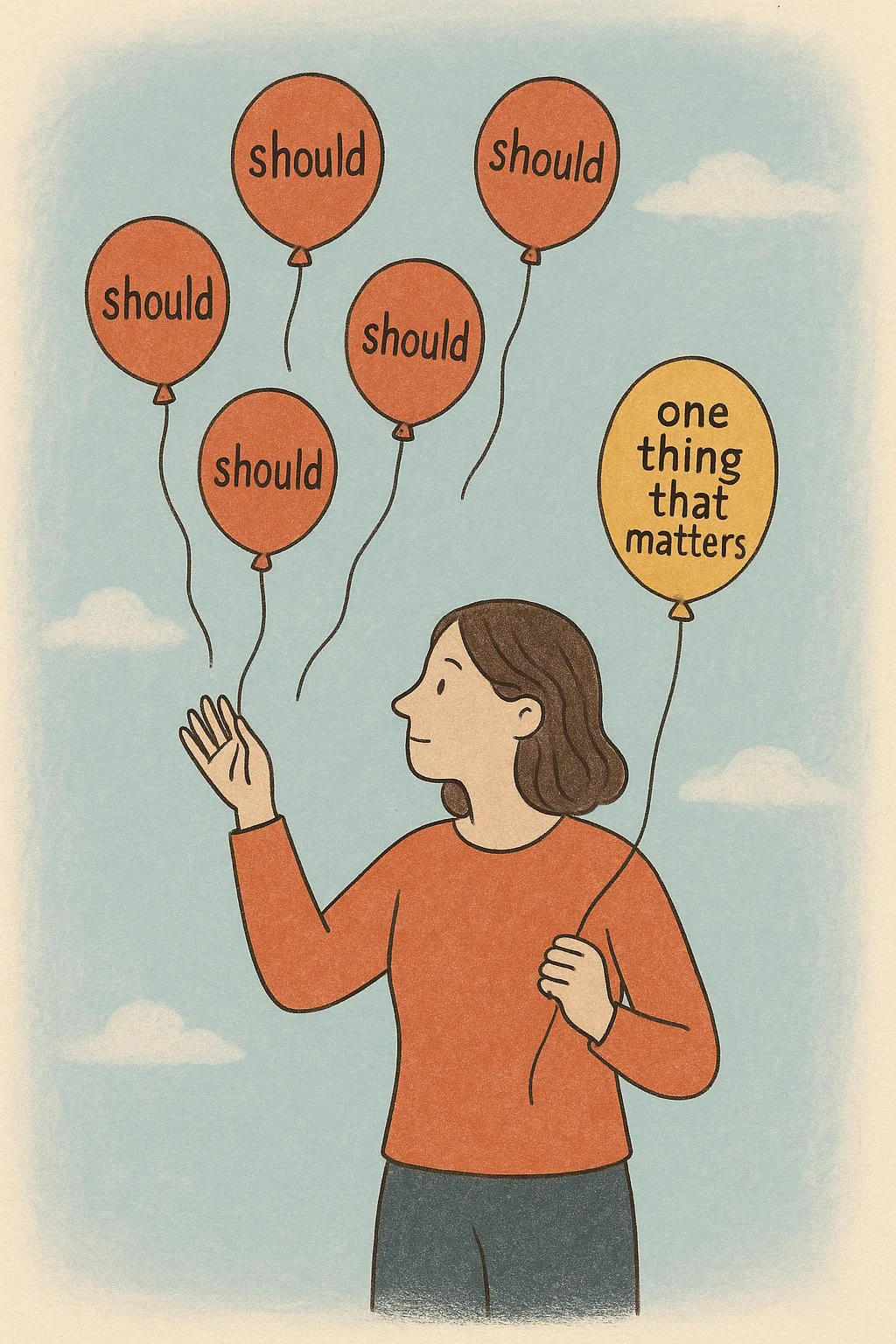
When Life Is Full of Shoulds: How to Reduce the Pressure and Choose What Really Matters
Most of us are surrounded by health and lifestyle advice. We are told we should eat whole foods, move more, drink more water, simplify our lives, manage stress and sleep better. These messages are everywhere, including in my own emails, because they genuinely help us live healthier, calmer lives.
But when the gap between what we think we should do and what we are actually doing becomes too wide, it can create a buildup of pressure rather than motivation. This is where cognitive dissonance comes in. It is the uncomfortable feeling we get when our actions do not match our values, health goals or the advice we believe is important.
Imagine waking up and instantly running through a mental checklist: eat better, walk before work, drink more water, stay calm, stretch, sleep more and stay on top of everything at home. By 8 am, you already feel behind, even though you have not done anything wrong. This is what living with too many shoulds feels like. The pressure builds long before the day has even started.
A helpful way to ease this pressure is to identify all the shoulds sitting on your shoulders. Write them down. Seeing them on paper creates clarity. You may discover that many of them come from external expectations, old habits or comparison with others.
Once you have your list, choose one should that truly matters to you. A simple exercise is to pause and ask yourself: What matters most to me over the next two to four weeks? Which of these shoulds connect to a personal value, such as health, calm, energy, family time or confidence? Start with the one that matches a value you care about. Let the rest sit on the shelf for now.
A short explanation of why this helps comes from neuroscience.
Our brains do not respond well to pressure or force. The word should activates resistance, tension and self-criticism. In contrast, giving yourself choice lowers internal stress and makes action feel safer and more achievable.
This is why reframing should into prefer can be so effective.
“I prefer to move more because I feel better afterwards.”
“I prefer to eat in a way that supports my energy.”
“I prefer to feel more relaxed when I can.”
You can also acknowledge valid limits by using prefer not to.
“I prefer not to take on more exercise this week. I am tired and need rest.”
“I prefer not to overhaul my eating right now. I have too much happening.”
Giving yourself permission to prefer not to do something reduces guilt and shows respect for your current capacity.
You can also use minimum versions of your preferences.
·Instead of “I prefer to walk every day”, try “I prefer to walk for five minutes after lunch”.
·Instead of “I prefer to cook more meals”, try “I prefer to wash and chop two vegetables tonight”.
Minimum versions build confidence and reduce the distance between ideal and reality.
When life feels full of shoulds, remember that change works best when it is gentle and gradual. Swap the word to prefer and decide if you want to do it or not. Pick one thing that matters, take one small step and give yourself permission to let go of the rest for now. Choices made with kindness last far longer than choices made with pressure.
